Our Blenheim Lecture this year took place early in October and followed our usual pattern, opening with a Reception and buffet supper in the Palace Orangery.
Our speaker was Julian Munby, a distinguished historian and archaeologist with interests in medieval buildings and in the history of landscape, gardens, and travel. He has been Head of Buildings Archaeology at Oxford Archaeology and has worked on conservation plans for the National Trust, English Heritage and others, and he is Archaeological Adviser to the Diocese of Oxford. Though clearly excellently qualified to talk on local church architecture, he elected instead to speak on another of his interests, the history of the carriage, a subject which he has studied extensively over many years.
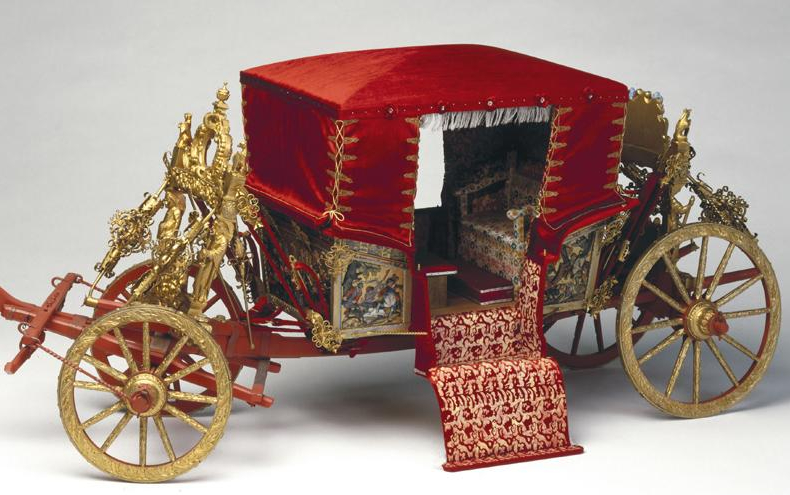
We were delighted by a lecture that was a tour-de-force in its sweeping coverage, starting with a Swedish Bronze Age rock drawing of a carriage chassis, passing through the archaeological remnants of a wagon from 500BC and the surviving metal parts of Roman chariots, through a beautiful illumination of a ceremonial carriage in the early 14th century Luttrell Psalter, and on to the marvellously decorated coaches of Central Europe and Imperial Russia. This was all illustrated with a sumptuous set of slides. We learned about the development of carriage design, its steering and suspension, and carriage decoration, and we learned about the roles of carriages – of course, a means of transport, but also as statements of wealth and power and as gifts supporting international diplomacy. We saw a summary of the accounts showing the massive costs under Elizabeth I of building, decorating, and maintaining her large fleet of coaches. Many of us see individual historic carriages or small collections of them on our visits, for instance, to stately homes and palaces; but this talk gave most of us for the first time an insight into the development of coaches and their significance over the ages.
Our thanks go to Julian for a splendid talk and to His Grace the Dule of Marlborough for once again offering us the use of the Palace for a most enjoyable evening.