
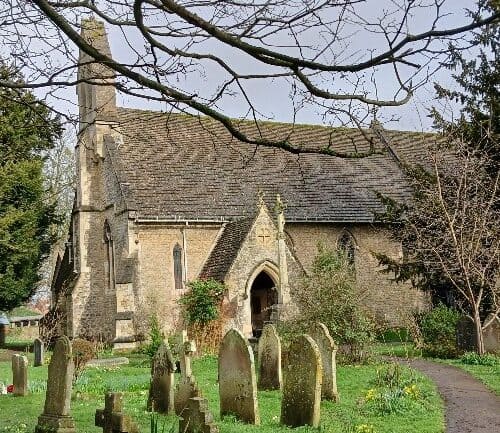
Holy Trinity, Headington Quarry is one of Gilbert Scott’s Gothic Revival churches, and it was built following an appeal by Bishop Wilberforce (in a sermon preached at St Aldates) for the foundation of a church to serve the unchurched community of Headington Quarry. Today it is probably best-known for a later association: C. S. Lewis and his brother worshipped and are buried here. The inscription on the flat oblong stone gives their names and dates. Clive Staples (‘C. S.’) Lewis had died first, in 1963, and the opening words are ‘In loving memory of my brother Clive Staples Lewis’. His birth and death dates follow, and then a quotation from Shakespeare’s King Lear, ‘Men must endure their going hence’. His brother Warren Hamilton (‘Warnie’) Lewis died ten years later, and was buried in the same grave. His name and dates were added to the inscription.
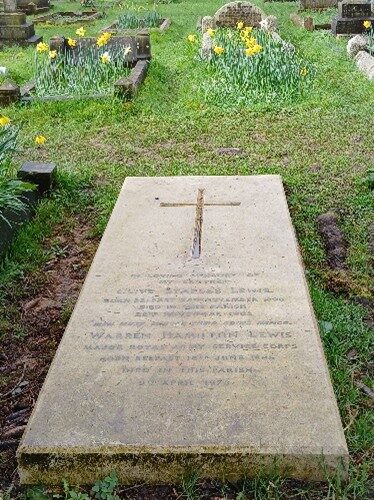
This alone might make Holy Trinity a place of pilgrimage for Lewis enthusiasts, but since 1991 there has been something else to see, the engraved glass ‘Narnia Window’ by Sally Scott, commemorating both C. S. Lewis, who habitually sat in a nearby pew, and two local children who had died young decades before, and whose parents had left a bequest for a memorial window in their names.
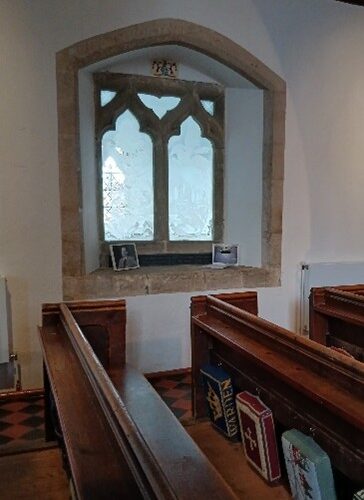
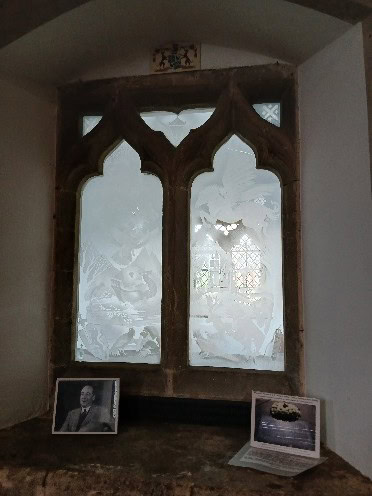
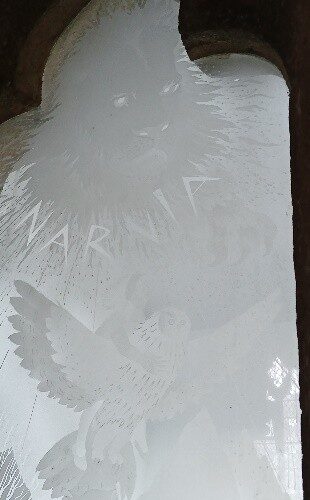
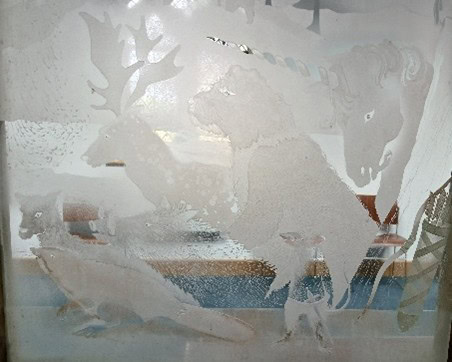
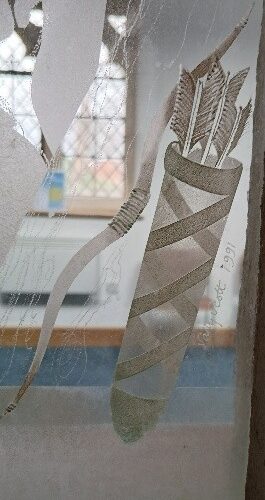
The window is set quite low in the north wall, so that someone of a child’s height can easily look at the details it features, from the face of Aslan and the name ‘NARNIA’ at the top of the left-hand light, to other characters and images from the Narnia stories—the Dawn Treader, Reepicheep and other animals, a quiver full of arrows. Sally Scott’s name, and the year of the window’s creation, 1991, appears to the right of the quiver.
Elizabeth Knowles
All photographs © Elizabeth Knowles.