
OHCT Trustee Malcolm Airs reviews this illuminating book on the significance and beauty of stained glass.

Despite its brevity this is an illuminating account of the significance and beauty of the stained glass from all periods which adorn our cathedrals. Janet Gough was formerly Secretary of the Cathedrals Fabric Commission and her stated aim in writing the book was ‘to encourage people to go and seek out cathedral glass for themselves, and to enjoy engaging with it as our predecessors did in previous centuries’. There can be little doubt that it will do just that.

A helpful preface briefly outlines the history of ecclesiastical stained glass by explaining its composition, its association with Gothic architecture and the need for conservation. It is complemented by a useful glossary of the technical terms used in the descriptions. The text then explores fifty windows or glazing schemes to be found in the cathedrals of the Church of England together with the Royal Peculiars of Westminster Abbey and St George’s Chapel at Windsor Castle and St German’s Cathedral on the Isle of Man. They are set out chronologically in three parts entitled The Middle Ages and the Reformation, The Long Nineteenth Century and The Modern Age with the significance of each period introduced by a succinct summary. Each entry is given a double page spread focussing on a single example which describes the theme and the method of manufacture and is illustrated by stunning photographs which emphasise their vibrant colours.

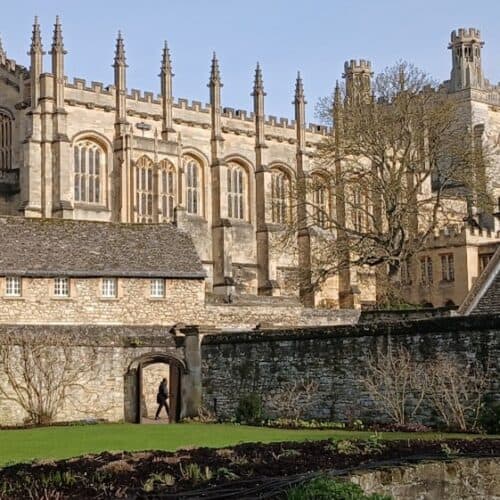
The entry for Christ Church Cathedral in Oxford is devoted to the window in the north aisle by the Dutch artist Abraham van Linge dating from 1631. It shows the prophet Jonah under a tree looking towards Nineveh and is the sole survivor of a whole set of windows by van Linge which were commissioned at the same time but were removed later in the century. It is a beautiful composition and an excellent example of the distinctive Flemish-style stained and painted glass that the van Linge brothers executed in a number of other Oxford college chapels in the early seventeenth century. Any visit to the cathedral inspired by this specific example would, of course, lead to the enjoyment of all the other windows from all periods that can be seen throughout the building some of which are briefly mentioned in the text.

Both publishers and the author deserve high praise for producing such an attractive publication in an easily portable format. The pleasure of dipping into each entry at home will act as an inspiration for countless journeys to experience at first hand the variety and beauty of the Divine Light which illuminates all our cathedrals.


Divine Light: The Stained Glass of England’s Cathedrals, Janet Gough, (Kulturalis, September 2025), 120 pages,  ISBN-10: ‎ 1836360274; ISBN-13: ‎ 978-1836360278, paperback, £14.95.
On Wednesday 18 March, the new Archbishop of Canterbury set out on foot from London on a 6-day pilgrimage to Canterbury Cathedral for her installation there on the 25th. Her journey is a reminder of the days of Chaucer when pilgrims regularly journeyed to the famous shrine of St Thomas Becket at the site of his martyrdom in the Cathedral in 1170. What echoes of Becket, and the wider custom of pilgrimage, can we find among our Oxfordshire churches?

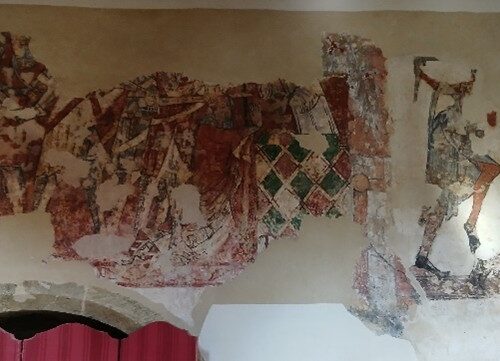
At least two churches are dedicated to him, St Thomas of Canterbury at Elsfield, and in Oxford itself, the church of St Thomas the Martyr in Becket Street. Both of these churches were medieval foundations, with dedications testifying to the popular devotion to the saint. Even more striking, though, are the astonishing wall-paintings, showing the scene of Becket’s martyrdom, at South Newington.

The earliest parts of St Peter ad Vincula, South Newington, date from the early 1300s, although like many of our churches it was further extended in the later fourteenth and fifteenth centuries.

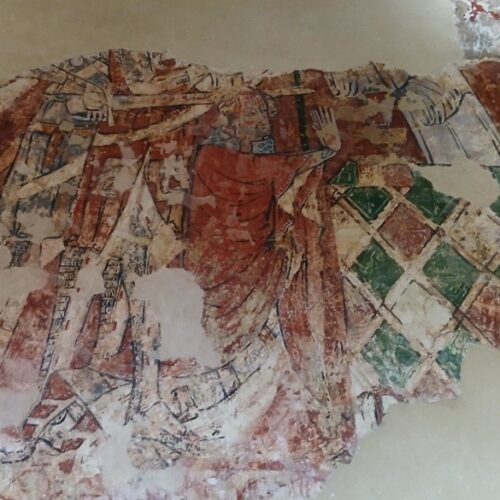
Its particular glory is found in its wall-paintings, most notably on the north wall a scene depicting the murder of Becket by the four knights. In it, Becket kneels looking towards the altar, hands held up either in prayer or to restrain intervention by his chaplain, whose white sleeves can be seen on the right. Swords are held menacingly above his head, evidently about to fall. It is astonishingly clear and vivid in its detail, and would surely have kept the story of Becket alive among all who saw it.

The South Newington wall paintings date from around 1330, and Oxford has another striking reminder of Becket in a stained glass window of only a decade or so later.

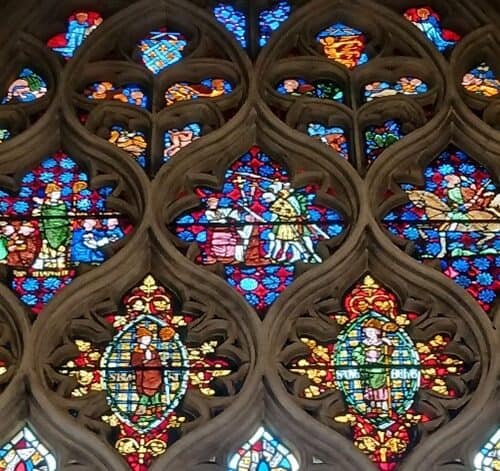
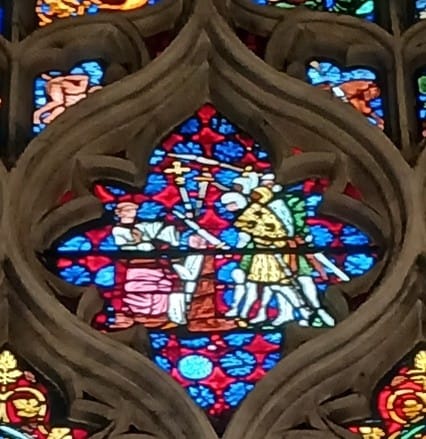
This is what is now known as the ‘Becket Window’ in the east window of St Lucy’s Chapel in Oxford Cathedral. The central lozenge in the second row of the richly coloured glass shows the martyrdom of the Archbishop.

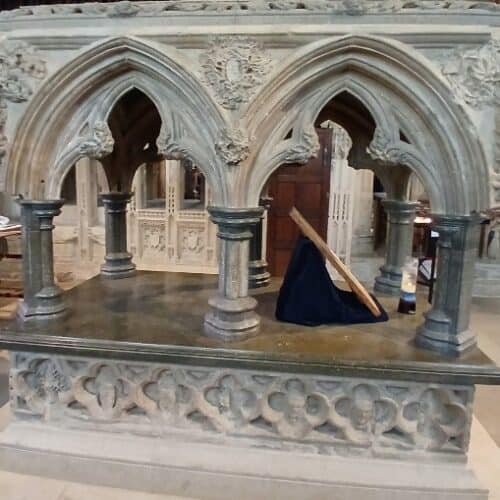
While Becket’s shrine at Canterbury was perhaps the premier destination in England for pilgrims, there were lesser-known shrines which were also centres for devotional journeys. You can find other reminders of some of them in other Oxfordshire churches. The remains of a shrine devoted to the Saxon princess St Edburg, once in Bicester Priory, can now be found in the church of St Michael and All Angels, Stanton Harcourt. At the Reformation it was removed (or rescued) from Bicester by Sir Robert Harcourt, then Sheriff of Oxfordshire, and brought to St Michael’s where it now stands against the north wall of the chancel.

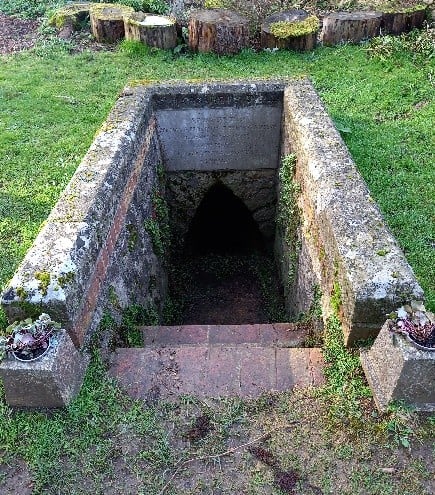
Oxford’s own patron saint is another Saxon princess, Frideswide, and the remains of her shrine are still to be found in the Cathedral. Go and look at it, and perhaps afterwards walk west along the Thames Path to find St Margaret of Antioch, Binsey, and the site in the churchyard there of what was once regarded as St Frideswide’s healing  well.

Or simply plan your own pilgrimage, by choosing a route that takes you to some of our other wonderful range of Oxfordshire churches.

Elizabeth Knowles

All photographs © Elizabeth Knowles. 

Post of County Ride+Stride Organiser

Ride+Stride is a national annual cycling or walking event between churches which raises funds for church maintenance through sponsorship.  The OHCT is looking for a new Trustee to fill this voluntary position for Oxfordshire.  We have typically raised about £90k each year in sponsorship, and one half to two thirds of this is retained by the Trust for its grants, with the remainder being passed directly to particular churches as directed by the participants.  Ride+Stride is an important source of recurrent income for the Trust and meets about one quarter of our annual grant-giving capacity.  The event takes place on the second Saturday of September.

The Organiser has three core activities – administrative; nurturing current volunteers and participants; and developing ways to recruit new participants.  The role calls for general project management skills including attention to detail.

The Organiser is well-supported in specific areas of the work by professionals.  For instance, we use an IT company to arrange for posting publicity on the website and mailshots, and managing online registrations and sponsorship receipts.  We also have an expert who sets up social media posts, and we have a data manager who holds the necessary address lists.

The Organiser needs a friendly personal touch to correspond with all the volunteers – the participants, both those taking part to raise funds and others (the “church coordinators”) who help recruit participants locally and ensure that the churches are open and welcoming on the day.  These people are all enthusiasts but it is important they feel encouraged and valued.

Well-tried protocols are in place, though there is always the possibility of finding simplification. November to April is a relatively quiet period – mainly answering payment queries and planning. The time required increases from April (revising paperwork and preparing the hardcopy mailshot), and from mid-July through to September is busiest (resolving queries and maintaining momentum particularly through publicity).  The busy periods mean the post is suited to an individual who is retired or in part-time employment.  There are three Trustee meetings and three Council meetings each year (roughly half these in person and half online by Zoom to reduce travel).  The meetings typically run on a weekday from 10:30 for about two hours.

Might you be able to help us in this way, or can you suggest a suitable acquaintance?  For further information, contact the Chair, Stephen Goss ([email protected]).

Appointment of Dr Linda Monckton as Trustee

Dr Linda Monckton was appointed in February 2026 as an OHCT Trustee.  She brings expertise on church buildings and an enthusiasm for our built heritage.  Dr Monckton has a first degree in the History of Art, she took an MSc in Historic Conservation at Oxford Brookes and then did a PhD at Warwick on late medieval ecclesiastical architecture in the south-west of England. She worked for six years as an administrator for the Cathedrals Fabric Commission for England before moving to English Heritage to be a senior architectural investigator. She has held a number of posts in English Heritage including Head of Research Strategy for Places of Worship and is currently Head of Wellbeing and Heritage looking at the social and health impacts of the historic environment.  She has lectured and published books and articles covering topics including church conservation law, medieval architecture and chantries, church pews, architectural fragments, faith and public policy, church closure trends, the public benefit of archaeology, and wellbeing and the historic environment.  She is a Fellow of the Society of Antiquaries.  She lives in Oxfordshire and continues to work for English Heritage.

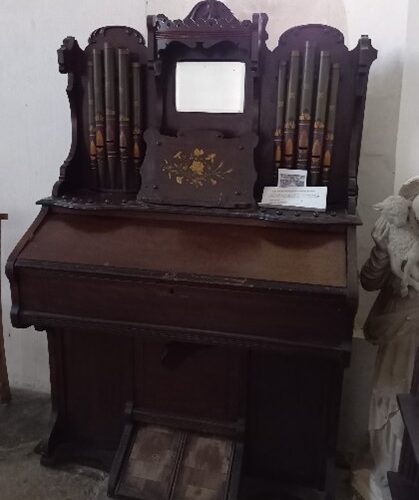
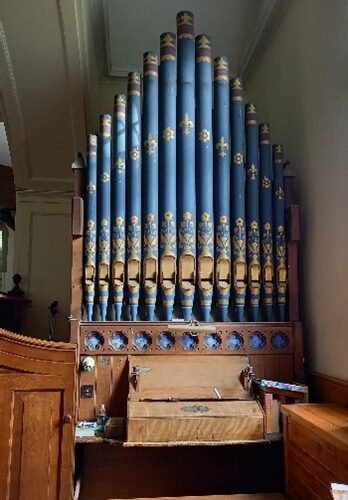
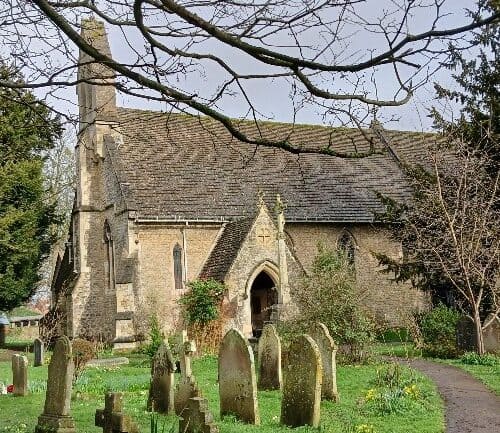
The recent survey by Pipe Up on church organs in British churches is a reminder that many of our churches have an instrument with a distinct and interesting history. The church of St Margaret of Antioch, Binsey, has a small portable organ at the back of the church, and a handwritten note explaining that it is ‘an Estey from Vermont’, dating from the 1880s. The Estey Organ Company from Vermont sold organs all over the world; it would be intriguing to know how this one got to Binsey!

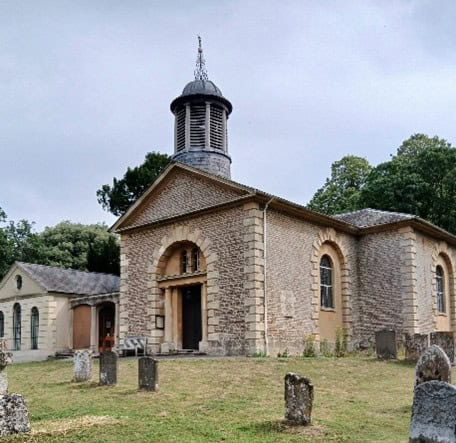
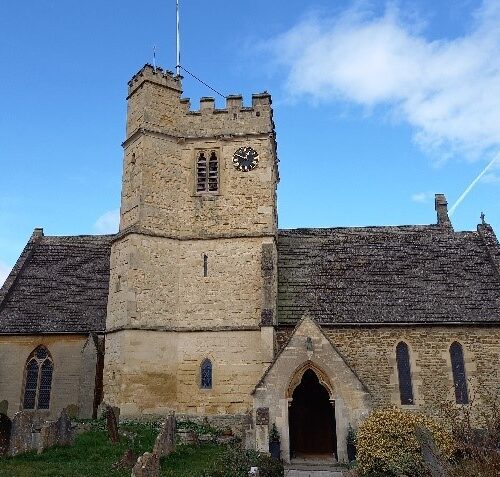
The organ in the Georgian church of St John the Baptist, Kingston Bagpuize, has also travelled, though for a rather shorter distance: apparently it came originally from St Lawrence, Tubney, at a time when that church was threatened with closure. This may have been in the 1950s, when Tubney church needed significant restoration which was achieved after a campaign in which the poet and enthusiast for all things Victorian John Betjeman played a part, it would be interesting to know exactly when it happened.

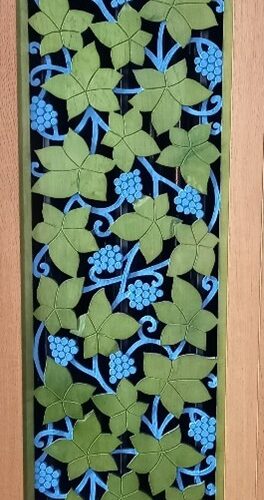
Church organ cases may also have attractive design features, as witness the vine motif  on the case of the modern (Kenneth Tickell) instrument installed in 2009 in St Andrew’s, Old Headington.

What history or special features does your church organ have?

Elizabeth Knowles

All photographs © Elizabeth Knowles. 

In honour of World Book Day 2026, celebrated on Thursday 5th March, we are pleased to share reflections from Elizabeth Knowles on the esteemed literary figure C. S. Lewis — author, scholar and creator of the Narnia chronicles — and his connection to the Oxfordshire church of Holy Trinity, Headington Quarry.

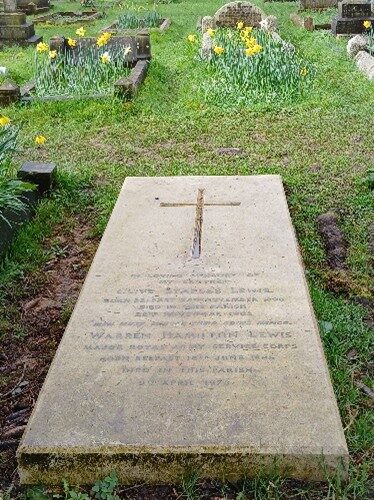
Holy Trinity, Headington Quarry is one of Gilbert Scott’s Gothic Revival churches, and it was built following an appeal by Bishop Wilberforce (in a sermon preached at St Aldates) for the foundation of a church to serve the unchurched community of Headington Quarry. Today it is probably best-known for a later association: C. S. Lewis and his brother worshipped and are buried here. The inscription on the flat oblong stone gives their names and dates. Clive Staples (‘C. S.’) Lewis had died first, in 1963, and the opening words are ‘In loving memory of my brother Clive Staples Lewis’. His birth and death dates follow, and then a quotation from Shakespeare’s King Lear, ‘Men must endure their going hence’. His brother Warren Hamilton (‘Warnie’) Lewis died ten years later, and was buried in the same grave. His name and dates were added to the inscription.

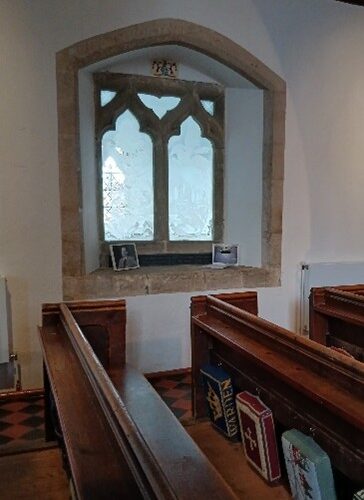
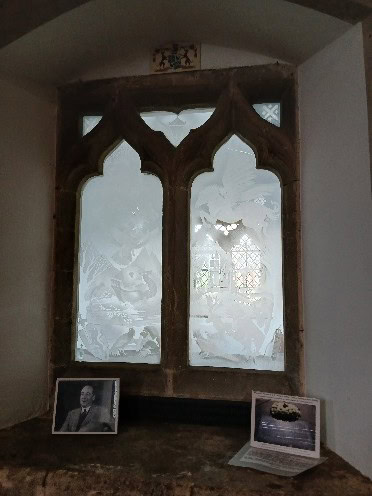
This alone might make Holy Trinity a place of pilgrimage for Lewis enthusiasts, but since 1991 there has been something else to see, the engraved glass ‘Narnia Window’ by Sally Scott, commemorating both C. S. Lewis, who habitually sat in a nearby pew, and two local children who had died young decades before, and whose parents had left a bequest for a memorial window in their names.

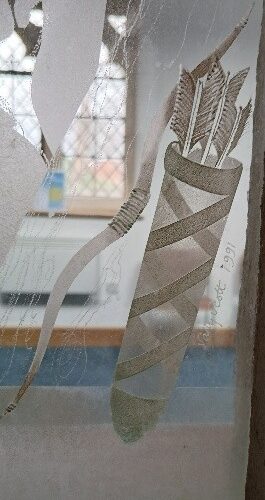
The window is set quite low in the north wall, so that someone of a child’s height can easily look at the details it features, from the face of Aslan and the name ‘NARNIA’ at the top of the left-hand light, to other characters and images from the Narnia stories—the Dawn Treader, Reepicheep and other animals, a quiver full of arrows. Sally Scott’s name, and the year of the window’s creation, 1991, appears to the right of the quiver.

Elizabeth Knowles

All photographs © Elizabeth Knowles.