• Denomination

  • Style

  • Clear all search and filter

Cuddesdon : All Saints

Cuddesdon : All Saints

Cuddesdon
The present church in was built in about 1180 over the foundations…
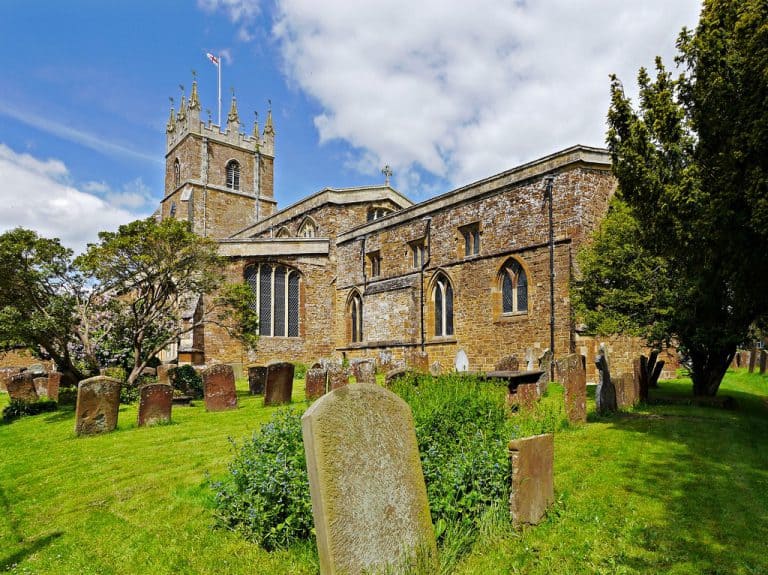
The present church in was built in about 1180 over the foundations of an earlier 12th-century church. It originally had only a single nave; the side aisles were added in 1240. The 14th century saw the roofs of the aisles raised and the addition of the south porch The chancel was rebuilt in the late 14th century and maybe again about 1500.
After the Dissolution of the Monasteries (1538-41), the church was no longer under the care of Abingdon Abbey and began to fall into decay. It was rescued around 1630, when a local builder supervised repairs to the upper part of the tower, the south wall of the south transept, the nave roof, and the pews.
Culham : St Paul

Culham : St Paul

Culham
St Paul’s Church is situated at the end of the village green,…
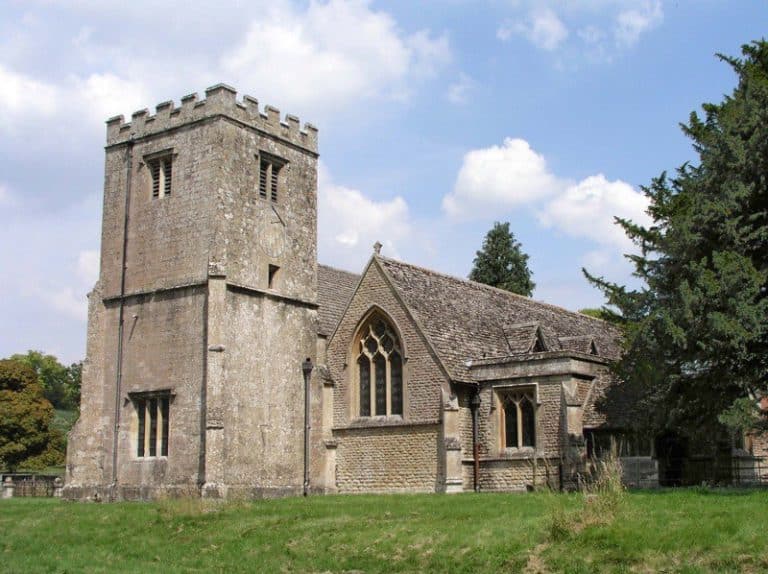
St Paul’s Church is situated at the end of the village green, opposite the Manor House and gardens. It has a long history and was closely linked in medieval times to Abingdon Abbey. The oldest part of the present church is the tower, built in 1710. Substantial rebuilding of the nave and chancel took place in the 19th century.
Didcot : Baptist Church

Didcot : Baptist Church

Didcot
Didcot Baptist Church as a group of people was founded in 1934…
Didcot Baptist Church as a group of people was founded in 1934 and the building was built and opened on 20 October 1938. The building has been extended in several stages and currently has two associated community halls, teaching rooms, with connecting corridors. The main worship area was turned through 90 degrees during one of these extension projects.
Didcot : St Peter

Didcot : St Peter

Didcot
A rapid expansion of Didcot began in the mid-1840s following the arrival…
A rapid expansion of Didcot began in the mid-1840s following the arrival of the railway. The new settlement of New Town began in the mid-1860s, later becoming North Hagbourne and eventually Northbourne. Building of a new church began in 1889, funded by GWR shareholders, and it was dedicated for worship in 1890 and given the name of St Peter’s.
Dorchester : Abbey Church of St Peter and St Paul

Dorchester : Abbey Church of St Peter and St Paul

Dorchester
One of the earliest Christian sites in Britain – has been a…
One of the earliest Christian sites in Britain – has been a centre of Christianity since A.D. 634, when St Birinus began a mission to Wessex. The imposing church is all that remains of an Augustinian abbey, founded in 1140. It was enlarged in the 13th and 14th centuries and restored in the I9th. It has good medieval stained glass, a remarkable Jesse window, and a rare lead font.
Enstone : St Kenelm

Enstone : St Kenelm

Enstone
A substantial well maintained and architecturally interesting Grade 2* medieval building on…
A substantial well maintained and architecturally interesting Grade 2* medieval building on a saxon site partly restored by George Street in the 19th Century.

The first building must have existed before 830 AD and some small Saxon remains can still be seen. The main Norman building was the nave and South doorway; the North aisle is early English and the South aisle 14th Century; tower, chancel, clerestory and porch are all of the Perpendicular period i.e. 15th Century. The Lady Chapel on the South side of the church is Tudor. There is a 16th Century priest’s chamber over the South porch. There are six bells. In 1856 there was a complete restoration under the well-known architect, George Edmund Street.
Eynsham : Baptist Church

Eynsham : Baptist Church

Eynsham
The current building was completed in 1818 (although a small chapel in…
The current building was completed in 1818 (although a small chapel in a converted barn existed in 1812). Originally there was a gallery at the rear of the church over the main doors, the windows had stone mullions and there were pews. At the front was a large central pulpit, before which was the baptismal pool. Although the pews and pulpit were removed in the latter part of the 20th century, the pool remains and is still used.The mullions in the windows and the gallery were removed in 1884 when the building became derelict.
Fernham : St John Evangelist Chapel

Fernham : St John Evangelist Chapel

Fernham
The Church of England parish church of Saint John the Evangelist was…
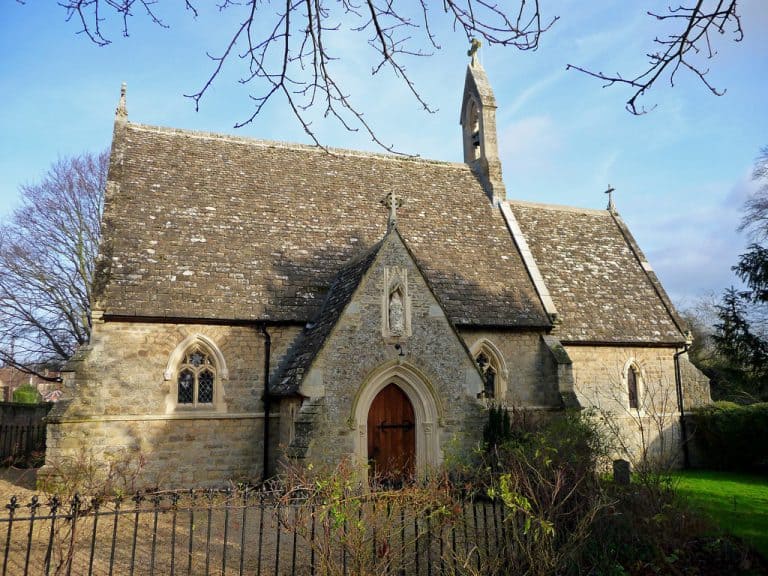
The Church of England parish church of Saint John the Evangelist was designed in 13th century style by the Gothic Revival architect J.W. Hugall and built in 1861 as a chapel of ease for Longcot. St. John’s parish is now part of a single Church of England Benefice with the parishes of Ashbury, Bourton, Compton Beauchamp, Longcot, Shrivenham and Watchfield. In 2008 the parish controversially spent a £90,000 grant from the Big Lottery Fund to strip St. John’s of its Victorian pews, lay a modern floor and reorder its interior for secular uses as a village hall.

Testing a popup